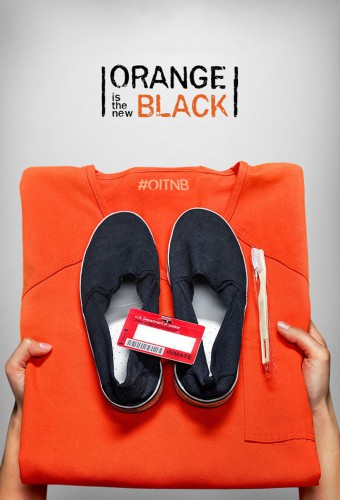
The series begins revolving around Piper Chapman (Taylor Schilling), a 33-year-old woman living in New York City who is sentenced to 15 months in Litchfield Penitentiary, a minimum-security women's federal prison in Upstate New York. Chapman was convicted of transporting a suitcase full of drug money for her girlfriend Alex Vause (Laura Prepon), an international drug smuggler. The offense had occurred 10 years before the start of the series and in that time, Chapman had moved on to a quiet, law-abiding life among New York's upper middle class. Her sudden and unexpected indictment disrupts her relationships with her fiancé, family, and friends. In prison, Chapman is reunited with Vause (who named Chapman in her trial, resulting in Chapman's arrest), and they re-examine their relationship. Simultaneously, Chapman, along with the other inmates, attempts to grapple with prison's numerous, inherent struggles. Episodes often feature flashbacks of significant events from various inmates' and prison guards' pasts. These flashbacks typically depict how an inmate came to be in prison or develop a character's backstory. The prison is initially operated by the "Federal Department of Corrections" (a fictional version of the Federal Bureau of Prisons) and was in a later season acquired by the Management & Correction Corporation (MCC), a private prison company.
The fifth season shows the prisoners revolting against the guards, wardens, and the system after MCC's failed handling of an inmate's death at the hands of a guard in the fourth season. The inmate death had followed a peaceful protest and subsequent instigation of an inmate fight by another guard. Fueled by the conditions the inmates are forced to tolerate, as well as grudges against the prison guards, a three-day riot ensues. During the riot, some inmates attempt to negotiate better living conditions and seek justice for the death of the inmate, while others pursue their own interests and entertainment, and a few seek no involvement. At the emergence of the riot, the guard who incited the fight in the prior season is critically wounded by an inmate who took the gun the guard illegally brought into the prison. At the end of the season, the SERT team raids the prison to end the riot and remove all inmates from the facility. During this raid, a correctional officer is fatally wounded by a corrupt "strike team", which then conspires to blame the guard's death on a number of inmates who hid in an underground bunker, found by one inmate, and had taken the guard hostage. All inmates are transported to other prisons.
The consequences of the riot are shown in the sixth season. A number of the inmates, including Chapman and Vause, are transported to Litchfield Maximum Security. Most of these inmates are interrogated, and several of them are charged and sentenced for their involvement in the riot. In max, new inmates are introduced, alliances are made, and a gang-like war emerges between two prison blocks, spearheaded by a longstanding feud between two sisters and a grudge harbored by them toward a former maximum-security inmate who returned as a consequence of the riot (she had been moved to the minimum-security prison). Inmates who arrived from the minimum-security prison are either caught up or willingly participate in the war between prison blocks. The season portrays further corruption and guard brutality.
The seventh season provides an ending to various inmates' stories. Chapman and Vause continue their on/off again relationship. The season shows how some prisoners are able to move beyond their time in prison while others are captured by the system and through their own flaws and/or systemic problems in the structure of US society and its justice system are unable to progress. In addition to the established setting of Litchfield Max, a significant portion of the season takes place in a newly created ICE detention center for detained presumed undocumented immigrants, showing their struggles and lack of access to outside help in large part because of complete or extreme disregard of the law.
In each season, the series shows how various forms of corruption, funding cuts by the corporate owner to increase profits by millions, privatization of prison, overcrowding, guard brutality, and racial discrimination (among other issues) affect the prisoners' safety, health, and well-being. One of the show's key conflicts involves the minimum-security prison's Director of Human Activities (aka the warden, under privatization nomenclature), Joe Caputo, whose efforts and aims as a warden constantly conflict with the corporate interests of MCC, which acquires Litchfield Penitentiary as it risks closure. This theme is continued when a new forward-thinking and caring warden is hired at Litchfield Maximum Security and unlike Caputo, actually institutes educational programs and positive changes. She is fired for these actions and her attitude toward the corporate corruption, although her short-lived changes have profound results.
Show creator Jenji Kohan read Piper Kerman's memoir after a friend sent it to her. She then set up a meeting with Kerman to pitch her on a TV adaptation, which she admits she "screwed up", as she spent most of the time asking Kerman about her experiences rather than selling her on the show. This appealed to Kerman as it let her know that she was a fan and she signed off on the adaptation. Kohan would later go on to describe the main character, Piper Chapman, as a "trojan horse" for the series, allowing it to focus on characters whose demographics would not normally be represented on TV.
Reception
Orange Is the New Black received critical acclaim throughout its run. It has been particularly praised for humanizing prisoners and for its depiction of race, sexuality, gender and body types.
The first season received positive reviews from critics. Review aggregator Metacritic gave it a weighted average score of 79/100 based on reviews from 32 critics, indicating favorable reviews. On Rotten Tomatoes, season one has a 95% approval rating based on 58 reviews, with an average rating of 8.3/10.
[about Piper] I mean, she told me how she traveled after college. But she failed to mention the lesbian lover who ran an international drug smuggling ring. Imagine my surprise.