Telelore

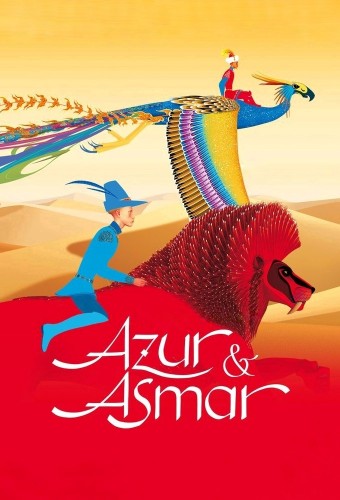
Azur & Asmar: The Princes' Quest

Original title: Azur et Asmar

  • 2006
  • 1 h 39 min
  • France, Italy, Spain, Belgium

Overview

Once upon a time, there were two children nursed by Jénane: Azur, a blond, blue-eyed son of a nobleman, and Asmar, the tan-skinned and dark-eyed child of Jénane. The nurse tells them the story of the Djinn-fairy waiting to be freed from her prison by a good and heroic prince. Brought up together, the two boys are as close as brothers until the day Azur's father cruelly separates them, banishing his nurse and Asmar from his home and sending Azur away to receive schooling from a personal tutor. Years later, Azur is haunted by memories of the legendary Djinn-fairy and takes it upon himself to journey all the way to Asmar's homeland to seek her out and marry her. Now reunited, he finds that Jénane has since become a successful and rich merchant, while Asmar is now a member of the Royal Guard. However, Asmar and Azur's separation has damaged their bond and Asmar also longs to find and marry the Djinn-fairy. They must learn to work together and get along again, but only one of the two princes can be successful in his quest.

Original title
Azur et Asmar
Runtime
1 h 39 min
Released
2006-05, Worldwide
Countries
France, Italy, Spain, Belgium
Original language
French

Release history

  1. Worldwide
  2. France
  3. Italy
  4. Spain
  5. United States
  6. Germany

Videos and photos

Photos

Production and reception

See all production notes

Production

Michel Ocelot conceived his film as a ''celebration of the Maghreb and Islamic civilization in the Middle Ages''. Having cherished memories of a trip to Algeria during his adolescence, he visited the ''three countries of the Maghreb to sketch the scenery for his film''. The city of Timgad particularly marked him. From another trip in 2001, the Bastion 23 and the Bardo Museum in Algiers inspired him a "beautiful Moorish dwelling." For the characters’ costumes, Ocelot particularly researched using a book about Algerian costume and those seen in the Bardo Museum. The women in the film wear Berber

Loading similar titles

More like this

Where to watch

Nothing here yet

Discuss

Nothing here yet