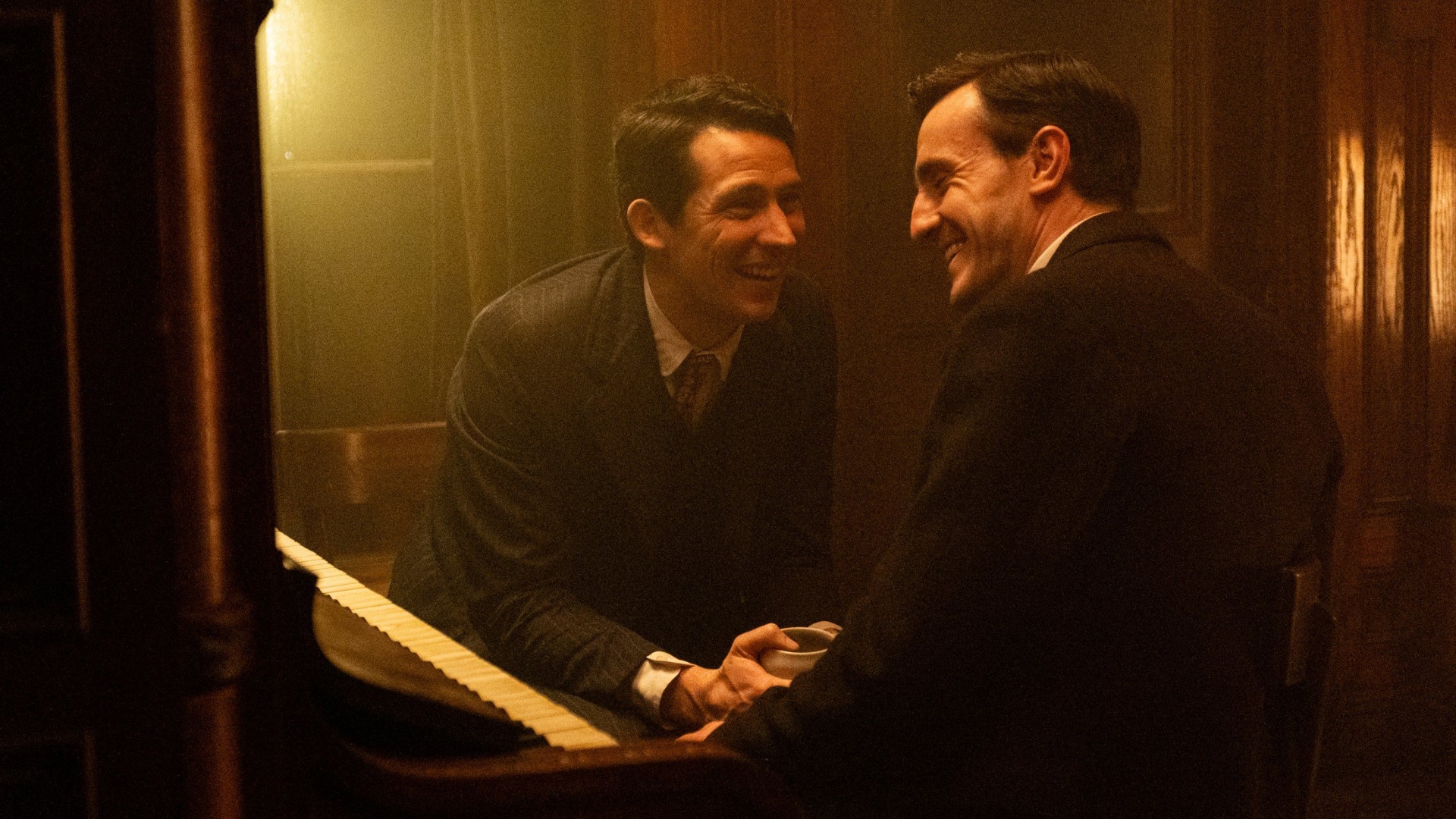
In 1917, New England Conservatory of Music student Lionel Worthing meets fellow student David White at a pub, where they instantly bond over their love of folk music before returning to David's apartment to have sex. As the two grow close, the United States enters World War I. The conservatory closes, David is drafted into the army and Lionel returns home to Kentucky. He sets music aside to tend to his family's farm after his father dies suddenly.
In 1919 Lionel receives a letter from David notifying him of his return from Europe and employment in a Maine college. He is set to embark on a department-funded trip across the state to collect folk songs on wax cylinders, and invites Lionel to assist him. The two reunite, rekindle their relationship, and travel around rural Maine, capturing folk songs from people of various walks of life. Eventually, they part ways again as David must return to work and Lionel plans to travel to Europe. Lionel corresponds with David via letters, only to stop writing after a year as he never receives a response.
In 1923 Lionel, now living in Rome, tells his lover Vincent of his dissatisfaction singing in a local choir and of his taking a job at the University of Oxford, ending their relationship on bad terms. A year later Lionel serves as conductor for the school's choir and is involved with student socialite Clarissa Roux, who invites him to meet her family at their country manor. During the trip, Lionel becomes overwhelmed with memories of David. The relationship with Clarissa also abruptly ends when Lionel must suddenly return to the United States due to his mother's grave illness. He comes home to find the house completely abandoned.
After putting his family's affairs in order, Lionel travels to Maine to find David, only to learn from a colleague that David had died some time after their trip and that his department never actually commissioned the song-collecting, leaving the location of the wax cylinders unknown. Lionel meets David's widow Belle, who reveals she knows who Lionel is. She explains how she and David met, and how David's death was a suicide as a result of shell shock from the war. She returns Lionel's letters and tells him she will send him the cylinders if they can be found. Lionel mourns David by visiting his favorite locations from youth and recounting a number of songs that endeared him to music, particularly "The Unquiet Grave".
In 1980 Lionel, now an ethnomusicologist, is promoting his newest book when a package containing the wax cylinders arrives at his doorstep, including one David made on the day of his death. On the recording, David apologizes to Lionel and thanks him for their time together before singing "Silver Dagger," the song Lionel sang to David when they first met.
The History of Sound originated with the production company End Cue, which found the short story of the same name in The Common, a literary journal based at Amherst College, and brought the project on board with author Ben Shattuck adapting his own work for the screen. Andrew Kortschak and Lisa Ciuffetti of End Cue structured the writer's deal and provided development financing to Shattuck. End Cue hired on Hermanus after the treatment stage of development.
Reception
On the review aggregator website Rotten Tomatoes, 68% of 141 critics' reviews are positive, with an average rating of 6.6/10. The website's consensus reads: "Its drawn-out pacing and overly familiar trajectory undermine its potential to truly surprise, but The History of Sound nonetheless offers a visually stunning and well-acted journey through its melancholic exploration of human connection." Metacritic, which uses a weighted average, assigned the film a score of 64 out of 100, based on 32 critics, indicating "generally favorable" reviews.
Davide Abbatescianni of Cineuropa described it as "a