The White Ribbon
Original title: Das weiße Band – Eine deutsche Kindergeschichte
- 2009
- 2 h 24 min
Overview
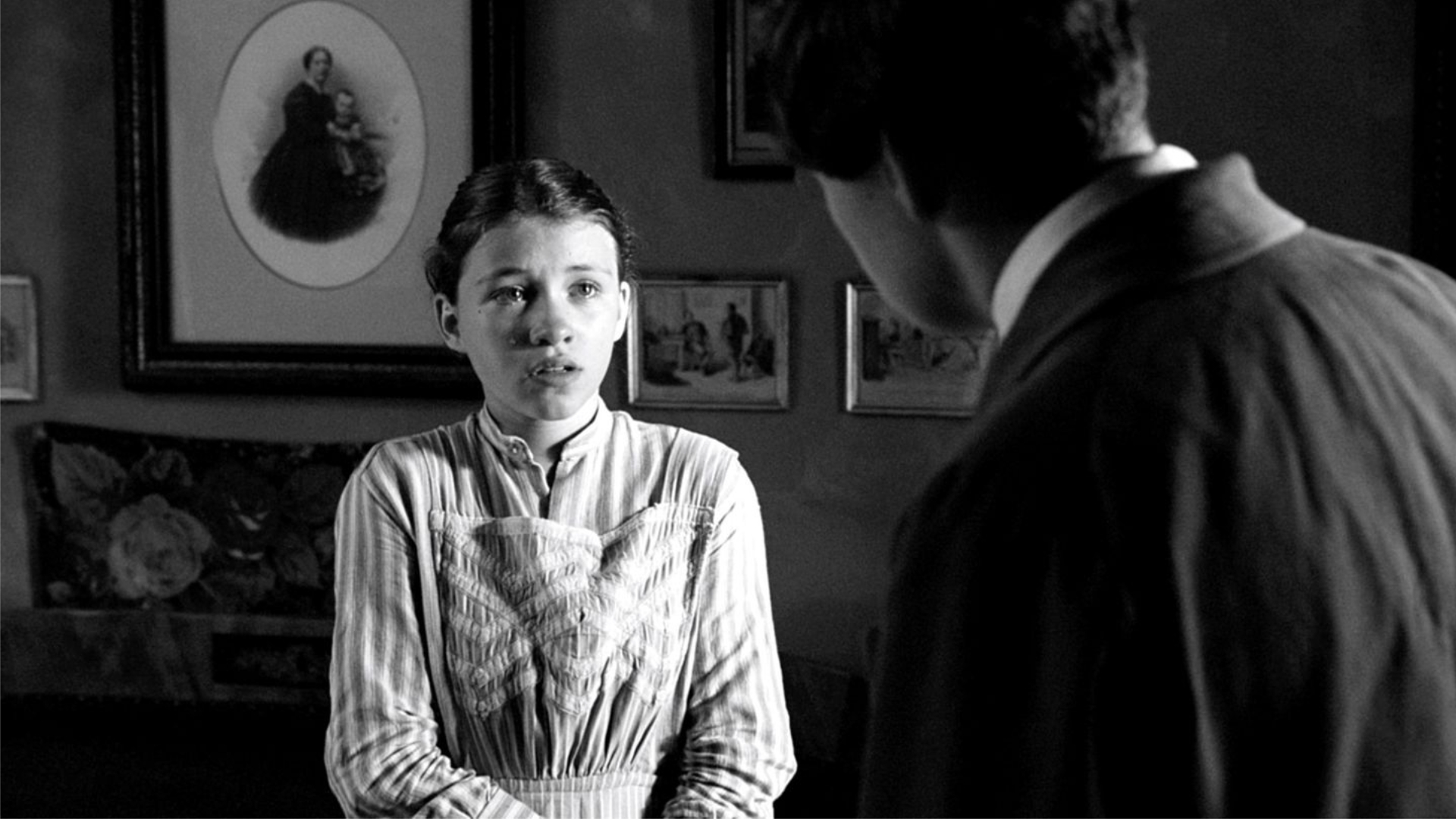
See production notesAn unnamed elderly tailor narrates the parable, recounting events from a distant year in which he worked as a village schoolteacher and met his fiancée Eva, a nanny. The setting is the fictitious Protestant village of Eichwald, in the Junker-dominated region of eastern Germany, from July 1913 to 9 August 1914, where the local pastor, doctor and baron rule over the area's women, children and peasant farmers. The puritanical pastor leads confirmation classes and gives his pubescent children a guilty conscience over apparently small transgressions. He has them wear white ribbons as a reminder of the innocence and purity from which they have strayed. When under interrogation, his son confesses to 'impure' touching; the pastor has the boy's hands tied to his bed frame each night. The doctor, a widower, treats the village children kindly but humiliates his housekeeper (the local midwife, with whom he is having an affair) and also sexually abuses his teenage daughter. The baron, who is the lord of the manor, underwrites harvest festivities for the villagers, many of them his farm workers. Eventually, the schoolteacher's friendship with Eva, the baron's nanny, leads to a visit to her family home during a Christmas break; asking for her hand in marriage, he receives from her taciturn father a reluctant permission to marry, but only after a one-year test-period delay. Unexplained harmful events occur over the course of the story. A wire is stretched between two trees, causing the doctor to fall from his horse. An overworked farmer's wife dies at the sawmill when rotten floorboards give way, after which his son symbolically destroys the baron's cabbage field. Her grieving husband later hangs himself. The baron's young son Sigi goes missing on the day of the harvest festival and is found the following morning in the sawmill, bound and badly caned; the baron summarily dismisses Eva as a result. A barn at the manor burns down. After an Italian sojourn, the baroness tells her husband that she is in love with another man, and intends to leave Eichwald. Shortly after the pastor berates his daughter in front of the confirmation class, she opens his parakeet's cage with scissors in hand; the pastor finds the bird on his desk, cruelly impaled in the shape of a cross. The daughter of the steward at the baron's estate claims a violent dream-premonition about harm coming to the midwife's handicapped son, then the boy is attacked and almost blinded, found during a night search along with a well-written note quoting Exodus 20:5. The steward violently thrashes his son for stealing a flute from Sigi. The midwife urgently commandeers a bicycle from the schoolteacher to go to the police in town, claiming that her son told her who attacked him. She and her son are not seen again. Meanwhile, the doctor and his family have also suddenly disappeared, leaving a note on the door indicating his practice is closed. The schoolteacher's growing suspicions lead to a confrontation in the pastor's rectory, where he suggests that the pastor's children and students had prior knowledge of the local troubles and insinuates that they likely perpetrated them. Offended, the pastor berates him and threatens to report him to the authorities and send him to jail if he repeats his accusations. Rumors that the doctor and midwife were at fault for the disturbing events begin to swirl. The film ends a few days after World War I officially begins, with the final scene occurring in Sunday church on the day of a visit from the narrator's prospective father-in-law. Disquiet remains in the village, with no good explanation of the violent events. The narrator is eventually drafted, leaving Eichwald, never to return.
Plot from The White RibbonCC BY-SA 4.0
- Countries
- France, Germany
- Original language
- German
Cast
See all credits


Gallery


Ratings
More like this
Where to watch
Where to watch is coming soon
Discuss
Discussion is coming soon