
Charles W. Morris
- philosopher
- university teacher
- writer
- Born 1901-05-23
- Died 1979-01-15 (aged 77)
- Nationality United States
Biography
Nothing here yet
Known for
Filmography
See full filmography| Role | ||||
|---|---|---|---|---|
| 1934 | 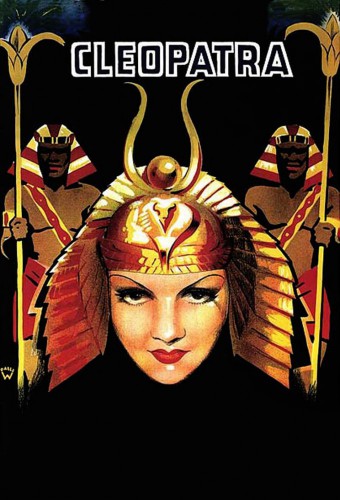 Cleopatra Cleopatra | Movie | 33 |
Career timeline
Award won Role or nomination
1901 age 0
Born1934 age 33
CreditCleopatra1979 age 77
Died
Worked with most
Family and influences
Nothing here yet
Photos
Nothing here yet
Quotes
I share the conviction held by many others that the movement of thought called "symbolism" is of great significance. Not only does this movement cut across the traditional lines of division among philosophers, but it coordinates in a remarkable way the work of linguists, sociologists, psychologists, anthropologists, and biologists, in so far as their work connects with the topic of mind. In the degree that the symbolic movement is significant, a work which develops systematically the basis of the movement, and at the same time applies this analysis to the topic of mind and to certain basic philosophical problems, can at least claim to be an important contribution to critical thought. Whether the claim is substantiated depends, of course, on the quality of the work itself.
Charles W. Morris, CC BY-SA 4.0
Men are the dominant sign-using animals. Animals other than man do, of course, respond to certain things as signs of something else, but such signs do not attain the complexity and elaboration which is found in human speech, writing, art, testing devices, medical diagnosis, and signaling instruments. Science and signs are inseparably interconnected, since science both presents men with more reliable signs and embodies its results is systems of signs. Human civilization is dependent upon signs and systems of signs, and the human mind is inseparable from the functioning of signs - if indeed mentality is not to be identified with such functioning.
Charles W. Morris, CC BY-SA 4.0
The process in which something functions as a sign may be called . This process, in a tradition which goes back to the Greeks, has commonly been regarded as involving three (or four) factors: that which acts as a sign, that which the sign refers to, and the effect on some interpreter in virtue of which the thing in question is a sign to that interpreter. These three components in semiosis may be called, respectively, the sign vehicle, the designatum, and the interpretant; the interpreter may be included as a fourth factor. These terms make explicit the factors left undesignated in the common statement that a sign refers to something for someone.
Charles W. Morris, CC BY-SA 4.0
Semiotics... is not concerned with the study of a particular kind of object, but with ordinary objects in so far (and only in so far) as they participate in semiosis.
Charles W. Morris, CC BY-SA 4.0
There are, then, syntactical problems in the fields of perceptual signs, aesthetic signs, the practical use of signs, and general linguistics which have not been treated within the framework of what today is regarded as logical syntax and yet which form part of syntactics as this is here conceived.
Charles W. Morris, CC BY-SA 4.0
The full characterization of a language may now be given: A language in the full semiotic sense of the term is any intersubjective set of sign vehicles whose usage is determined by syntactical, semantical, and pragmatical rules.
Charles W. Morris, CC BY-SA 4.0
TV appearances
Nothing here yet
Facts
Personal details
- Nationalities
- United States
- Languages
- English
- Education
- Northwestern University, University of Chicago, University of Wisconsin–Madison